
Space enthusiasts across the UK will be treated to two spectacular displays within hours on Wednesday as the annual Perseid meteor shower reaches its peak.
The spectacle will be visible just hours after the partial solar eclipse, with astronomers saying the viewing conditions for this year are promising.
The meteor shower is produced as Earth ploughs through a stream of dust left behind by Comet Swift-Tuttle.
Each tiny grain strikes Earth's atmosphere at about 36 miles per second, burning up in a brief flash that takes the appearance of a shooting star.
NASA says about 50 to 100 meteors per hour may be visible under ideal conditions during Wednesday night's peak.
A new moon will prevent moonlight from spoiling the show, boosting the chances of seeing some night-time flashes.
The Perseids will coincide with a total solar eclipse across Spain, Iceland and Greenland and a six-planet parade - meaning people in those countries may get extremely lucky and see both events at the same time.
However, those in the UK will have to wait until it's dark to have a chance of seeing any flashes. The best time to see the Perseids is between midnight and 5.30am.
The next major meteor shower will not peak until October.
Why does the Perseids meteor shower happen?
The phenomenon has been recurring for centuries, with the meteors typically being no bigger than a grain of sand.
Perseids - named after Perseus, the constellation that the meteors are believed to originate from - are also known for their fireballs.
This is characterised by larger explosions of light and colour which stay in the sky for longer than the average meteor streak.
Where and how can I see the meteors?
Luckily, England and Wales are expected to have mostly clear skies for both the eclipse and the Perseids later.
Southeastern parts of Scotland, Northern Ireland and Ireland look cloudier, but there'll still be some clear spells there, whereas the North West will be generally cloudy.
Alfredo Carpineti, space and physics editor at IFL Science and author of the book Invisible Rainbows, said: "It's so exciting to have these two events happening on the same day.
"I've gone through 5,000 years' worth of eclipse data from NASA, and it looks like Wednesday will be the first time there's an eclipse happening on the same day as the peak of a major meteor shower."
Read more from Sky News:
Trainee police officer charged with rape and kidnap of woman
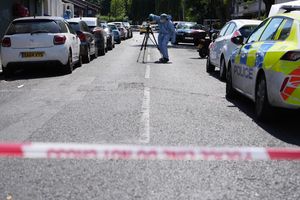
Man, 25, shot dead in London
Unsurprisingly, experts say observers should still try to avoid well-lit and built-up areas and try to find unobstructed views to make the most of the spectacle.
Meteorite expert Dr Ashley King, from London's Natural History Museum, said standing on a hill in the middle of the countryside or going to the coast are typically ideal meteor-viewing locations.
He adds that the skies may look blank for the first 10 minutes while your eyes adjust to the dark, so warned stargazers to be patient.

(c) Sky News 2026: Meteor shower to reach peak hours after solar eclipse - here's where to see it
 Man, 25, shot dead near Clapham pub
 Family behind Tottenham Hotspur vies with club's former chairman Daniel Levy for NBA Europe's $1bn London team
 Losses balloon at Trump Media the company behind Truth Social
 Donald Trump 'whisked off plane via catering container before taking secret flight'