


There's a sense of crisis hanging over the US dollar - and it has consequences for all of us.
Its roots can be traced back to last year when its value against a basket of other international currencies, including the pound, fell by 9%.
We've seen that extend by more than 2% in January to date. Earlier on Tuesday, the pound was at its highest level against the dollar since July 2021.
Money latest: The boom of chicken shops in UK
What's behind it?
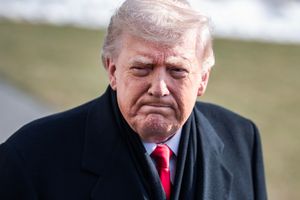
Much of the dollar weakness is being attributed to the actions and threats that have oozed from Donald Trump since he returned to power.
The US president's trade war has damaged the effect the greenback (the world's reserve currency) has on the world stage.
Wider foreign policy, including military action against Iran and in Venezuela too, hasn't helped. Remember the tariff threats against NATO allies over Greenland - since dropped?
Other factors include market fears over the Federal Reserve's independence and huge increases in public spending which have called into question the chances of a budget deal on Capitol Hill to avert a fresh government shutdown ahead.
In effect, we're seeing a crisis of confidence engulf the dollar under a weight of uncertainties, despite a healthy pace of economic growth in the world's largest economy. Consumer confidence data out this week added to the jitters of a big shift towards negative sentiment.
Japan's contribution
The pressures on the dollar have been compounded this week by speculation of joint US and Japanese central bank action to help stabilise the weak Yen.
Its value has collapsed on the back of persistently low interest rates which have made it attractive as a source of credit to invest in higher-yielding currencies.
The falling dollar, however, has eroded expectations that intervention will actually be needed.
Isn't this all a problem for the president?
Mr Trump described the dollar's fortunes as "great" on Tuesday. That triggered a further slump.
There is more below on the effects, but there are pros and cons.
A weaker dollar makes US exports more attractive - and imports (mostly subject to tariffs too) less attractive.
There is a widely held suspicion that Mr Trump wants dollar values down as part of a push to shrink US trade deficits.
The problem with that is that it risks a rush abroad to sell US treasuries - government debt - at a time of well established concerns over the sustainability of the US debt pile.
That could spark a spike in government borrowing costs beyond America.
What does it mean for Britain?
The pound is at its highest level against the dollar since the summer of 2021, as we've said, standing above $1.38.
It's fair to say that it's pretty much all down to dollar weakness than any great push for the pound.
The result is good news for anyone travelling to the US, as your pound will go further.
It's positive too for the cost of US goods and dollar-priced commodities when imported. It means less upwards pressure on UK inflation.
Conversely, it does little to bolster competitiveness for UK exporters to the US, especially at a time of heightened US trade tariffs.
The comforting element here though is that it's the same for other non-US nations, many of which have higher levels of tariffs against them.
The weak dollar will hurt US earnings of UK-based companies and any US-based investment values, especially when transactions are booked in sterling.
Many workplace pension schemes, for example, will have dollar-denominated assets.
When you consider the extent of the dollar weakness, a fall of more than 11% in the dollar since President Trump's return will have cancelled out similar gains in an asset's value in dollar terms.
When turned on its head, it makes UK market investment by Americans more attractive at a time when many US investors are searching out value and a hedge against an AI-driven stock market bubble.
Dodging the 'falling chainsaw'
Karl Schamotta, chief market strategist with payments company Corpay, said of the mood: "With the 'tariff man' showing no sign of repentance and the US government headed into another shutdown, economic policy uncertainty is soaring once again, leading to an intensification in the 'Sell America' trade that has dominated markets for the better part of a year.
"Positive fundamentals should eventually reassert themselves, but for now, no one is willing to catch the falling chainsaw that is the US dollar."

(c) Sky News 2026: Dollar has become a 'falling chainsaw' - what it means for you
 It's genuinely frightening to wonder where America goes next
 British Airways flight to London loses wheel during take-off
 Danger to life flood warning in Dorset as Storm Chandra disruption continues
 ICE victim wasn't a 'would-be assassin', Trump says