
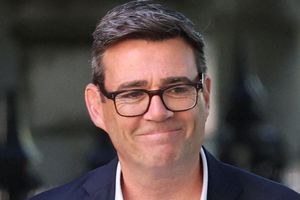
A cross-party group of MPs has told prime minister-in-waiting Andy Burnham he should allow councils to increase council tax by as much as they want.
The recommendation comes as part of the all-party parliamentary group (APPG) on local government's report, seen by Sky News, into how fiscal devolution is vital to delivering economic growth.
Politics latest: Follow live
Mr Burnham has made devolution a key part of his platform and has pledged to deliver the "biggest rebalancing of power our country has seen".
The MPs say Mr Burnham should axe the council tax referendum principles, which say authorities must ballot their residents if they want to put up council tax by more than 5% – or 3% for authorities without adult social care responsibilities.
But many local authorities have been given permission by the government in recent years to increase council tax by much more than 5% without the need for a vote, in an attempt to stop councils going under as they manage huge gaps in funding.
The MPs say that shows the "absurdity" of the current situation – although they accept allowing hikes would come with "political costs" to local authorities
"If councils facing acute financial pressures can be trusted to set higher council tax rates – some because of their own poor leadership – why can't all local authorities do so?" the MPs ask.
Many struggling councils have cut back on services they aren't required to provide by law to fund ballooning adult social care, children's social care, and homelessness support bills, as well as years of budget cuts from central government.
The MPs also say Mr Burnham could go further by following the example of the Welsh government in adding a new upper council tax band for the most expensive properties.
Speaking to Sky News, Labour MP Clive Betts, who chairs the APPG and backs Mr Burnham for leader, said that alongside the devolution of powers, he wants to see the "devolution of accountability and responsibility".
"In the end, councils who are elected should be responsible for explaining local tax to local voters. Those voters will decide whether councils behave reasonably for the level of council tax they are levying."
He pointed out that councils were responsible for deciding the level of council tax they charged "for over a century", with the referendum principles only introduced in 2011.
The report also backs assigning a proportion of the funds raised by income tax and stamp duty, as well as a mass devolution of taxes like landfill tax and the growth and skills levy, which it says would give local places control of an extra £79bn to spend on public services.
The devolution of these taxes should come alongside powers over economic development, skills and employment, which they say will allow areas to boost local economic growth.
Mr Betts added that Mr Burnham, who as Greater Manchester mayor spent nine years leading the combined authority there, needs to ensure that devolution "must extend well beyond combined authorities to encompass local government as a whole".
Elsewhere, ministers have confirmed they will publish their proposals for a massive shake-up of councils across England this week, expected on Thursday – rather than wait until Mr Burnham is in post.
Ministers are merging district and county councils so that all areas have one overarching council that delivers all services in a bid to cut duplication and end confusion over what council does what.
But the plans are controversial, with some areas having reorganisation plans imposed on them against their will.
Elections for the new councils next May will be Mr Burnham's first big test at the ballot box.

(c) Sky News 2026: Allow councils to put up council tax by as much as they want, MPs tell Burnham
 British special forces 'dropped prisoners from forklift for fun', Afghanistan Inquiry hears
 Fifth British national identified as victim of wildfire in Spain
 Burnham's 'challenge' as pledge to halve schools disadvantage gap gets tougher
 World-class UK medical research not delivering enough benefits for British people